
A bathroom sink that drains slower every week is one of the most common household annoyances — and one of the most satisfying to fix yourself. Here’s the thing most guides bury: the clog usually isn’t deep in your pipes. It’s hair, wrapped around the pop-up stopper assembly right under the drain. Start there and you’ll solve most slow bathroom sinks in 10 minutes.
Work from the drain downward, easiest first. Only move to the next method if the previous one didn’t fully clear it.
Quick answer: Most bathroom sink clogs are hair wrapped around the pop-up stopper assembly — not deep in the pipe. Start there: pull the stopper, clear the hair, and test the drain. If it’s still slow, work down the line: a zip tool, a plunger (cover the overflow for suction), then the P-trap. Skip to a pro if multiple drains are slow.
⏱ 10–45 min depending on method · 💲 $0–10 (typical range) · 🛠 Beginner
What you’ll need:
- Rubber gloves (this job is gross — that’s normal)
- Old towel and a bucket
- Plastic zip drain tool ($3–5 at any hardware store — worth owning)
- Cup plunger (the simple sink kind, not a flange toilet plunger)
- Adjustable wrench or channel-lock pliers (for the P-trap)
- Flashlight
Stocking your first toolkit? Our essential DIY tools guide has the full list.
Safety first: If you’ve already poured a chemical drain cleaner down this sink, stop and read the chemical section below before putting your hands or tools in the drain. Never mix drain cleaning products. Wear gloves and eye protection any time you’re handling drain water or chemicals.
Step 0: Where Is the Clog? (30-Second Diagnosis)
| Symptom | Clog location | Start with |
|---|---|---|
| Drains slowly, worse over weeks; you can see hair around the stopper | Pop-up stopper assembly | Step 1 |
| Water stands in the basin; stopper area looks clear | P-trap or just past it | Step 2, then Step 4 |
| Multiple fixtures slow (sink + tub, or sink + toilet gurgling) | Branch or main drain line | Skip to “when to call a pro” — this is beyond sink-level DIY |
| Sink drains fine but smells bad | Biofilm/slime in the drain, not a clog | Clean the stopper and overflow; flush with very hot water |
Step 1: Remove and Clean the Pop-Up Stopper (Fixes Most Clogs)
This is the most common cause of slow bathroom sinks: hair and soap scum matted around the stopper and its pivot rod.
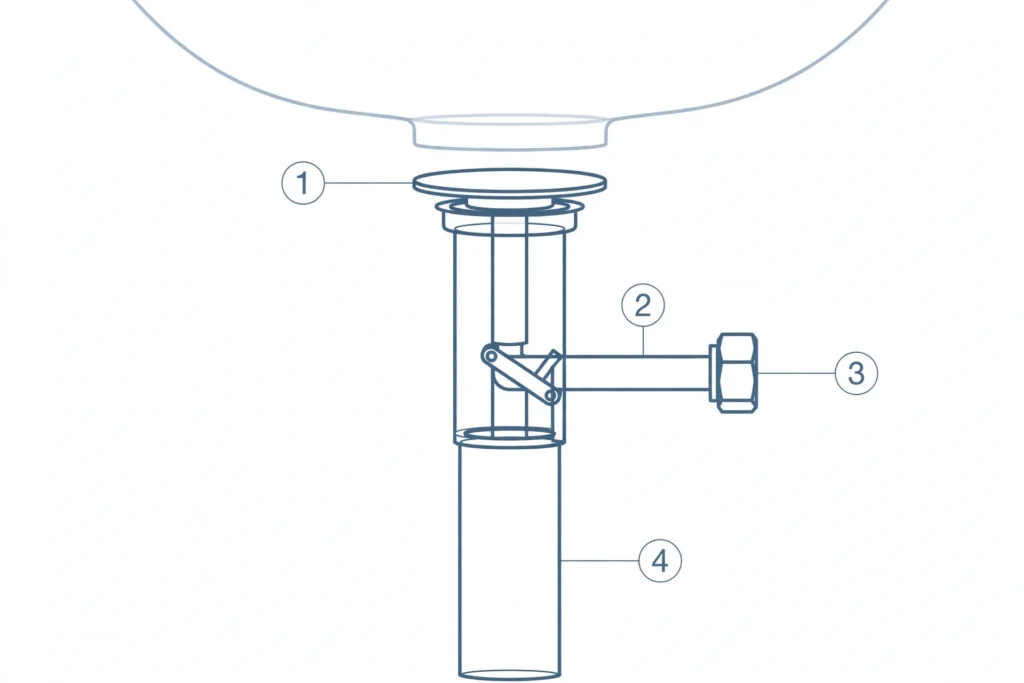
- Try lifting it out first. Many pop-up stoppers pull straight up and out. Wiggle gently while lifting.
- If it won’t lift out, look under the sink: find the horizontal pivot rod going into the back of the drain tailpiece, held by a retaining nut. Unscrew the nut by hand (or with pliers), pull the rod out slightly, then lift the stopper out from above.
- Pull off the mess. Hair wrapped around the stopper and rod — remove all of it. It’s unpleasant and deeply satisfying.
- Clean the stopper with hot water and an old toothbrush. Reinstall it (reverse of removal — rod back through, nut snug, not gorilla-tight).
- Test the drain. If water flows freely, you’re done — this was the whole problem.
Step 2: Run a Zip Tool Down the Drain
If the stopper area is clear but drainage is still slow, the clog is a bit deeper — usually more hair just past the stopper.
- With the stopper removed, push the plastic zip tool (those barbed plastic strips) down the drain as far as it goes.
- Pull it back out slowly — it’ll drag a revolting rope of hair with it. That’s success.
- Repeat 2–3 times, then run hot water and test.
Zip tools are cheap, reusable a few times, and reach clogs that fingers can’t. If you own one plumbing gadget, make it this one.
Step 3: Plunge It (With the Overflow Covered)
A plunger works on sinks — but only if you get a seal, which means dealing with the overflow hole.
- Remove the stopper if you haven’t already.
- Cover the overflow hole (the small hole near the top of the basin) with a wet rag, held firmly. Without this, air escapes through the overflow and the plunger can’t build pressure.
- Fill the basin with 2–3 inches of water — enough to cover the plunger cup.
- Place the cup plunger over the drain and pump vigorously 10–15 times.
- Pull the plunger away sharply on the last stroke and see if the water drains.
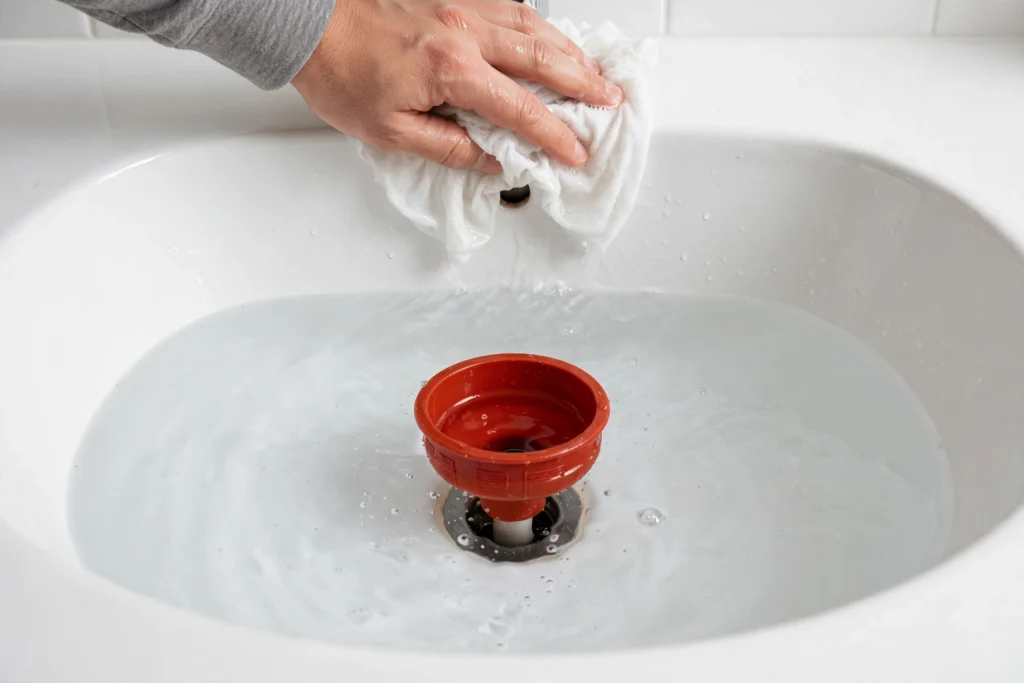
Repeat once or twice if it’s improving but not clear. If three rounds do nothing, move on — the clog needs the P-trap treatment.
Step 4: Remove and Clean the P-Trap
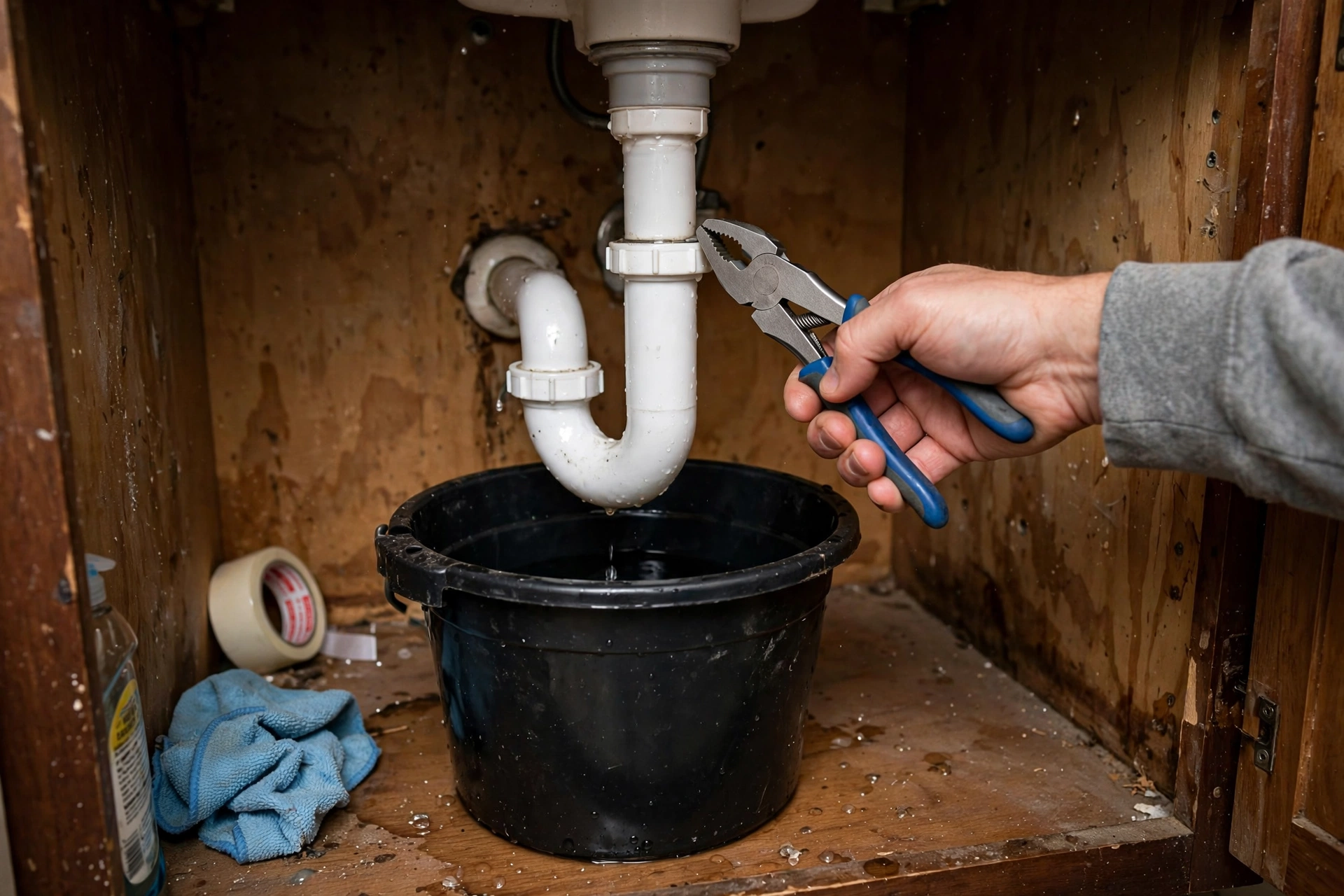
The P-trap is the U-shaped (or J-shaped) pipe under the sink. It’s designed to hold water to block sewer gases — and it’s also where clogs settle. Removing it is a beginner job; it just looks intimidating.
- Put the bucket directly under the trap. There will be water in it — that’s normal.
- Unscrew the two slip nuts holding the trap (one at each end). Most are hand-tight; use channel-lock pliers gently if they’re stuck. Support the trap as the second nut comes off so it doesn’t drop.
- Dump the trap’s contents into the bucket and clean it out — the clog is often sitting right there.
- Check the drain stub going into the wall: shine the flashlight in. If you see the clog just inside, pull it out with the zip tool. Don’t push it deeper.
- Reassemble: slip nuts and washers back in the same order and orientation they came off. Hand-tighten, then a quarter-turn with pliers. Don’t overtighten — plastic nuts crack.
- Run water and check both connections for drips. A small drip usually means a washer seated crooked — loosen, reseat, retighten.
If the under-sink pipes are old chrome or corroded metal instead of plastic, be extra gentle — corroded slip nuts can crumble. If one disintegrates, that’s a hardware-store trip for a replacement trap (they’re inexpensive and come in standard sizes), not a disaster.
The Honest Truth About Chemicals
Baking soda + vinegar: The internet loves this one. Here’s the reality — the fizz is just an acid-base reaction. It does not dissolve hair, which is what bathroom sink clogs are made of. It can freshen a smelly drain, but it won’t clear a real clog. Don’t rely on it.
Chemical drain cleaners (the caustic or acidic kind): they can work on some clogs, but treat them with respect:
- Never mix products. Mixing different drain cleaners (or with bleach) can create dangerous fumes.
- Ventilate the bathroom and wear gloves and eye protection.
- Follow the label exactly — more product or longer wait times don’t help and can damage pipes.
- Skip chemicals entirely if: you have a septic system (check the label), the pipes are old and corroded, or you’ve already tried one product without success. Doubling up is how pipes get damaged.
- Tell your plumber if you used chemicals and then call one — it’s a safety issue for them too.
Mechanical methods (everything in Steps 1–4) usually clear hair clogs more effectively than chemicals, with none of the risk. That’s why they’re listed first.
Prevention: Keep It Draining
- A cheap mesh drain screen (a few dollars) catches hair before it enters the drain. Empty it weekly. This single purchase goes a long way toward preventing repeat clogs.
- Run very hot water for 30 seconds after heavy use (toothpaste, shaving cream) to flush soap scum before it builds up.
- Clean the pop-up stopper every few months — 2 minutes of prevention.
- Don’t pour grease, wax, or thick products down the bathroom sink.
Troubleshooting: Problem → Cause → Fix
| Problem | Likely cause | What to do |
|---|---|---|
| Drain still slow after cleaning the stopper | Clog deeper in the trap or wall pipe | Zip tool, then P-trap removal |
| P-trap is clear but water still stands | Clog in the wall pipe past the trap | Try the zip tool deeper; if no luck, call a pro (may need a drain snake) |
| Bad smell but drains fine | Biofilm in the overflow channel or drain | Scrub the stopper and overflow with a bottle brush; flush with very hot water |
| Leak at the P-trap after reassembly | Washer seated crooked or nut overtightened | Loosen, reseat the washer flat, retighten gently |
| Multiple drains slow or gurgling | Main or branch line issue | Stop — call a plumber. This is beyond sink-level DIY |
FAQ
Why does my bathroom sink drain so slowly?
Almost always hair and soap scum wrapped around the pop-up stopper assembly. It’s the narrowest point in the drain path and the first place debris collects. Pull the stopper and clean it before trying anything else.
Can I use Drano or a similar product in a bathroom sink?
You can, but mechanical methods work better on hair clogs and carry no chemical risk. If you do use a chemical cleaner: never mix products, ventilate, wear gloves and eye protection, follow the label, and skip it entirely with a septic system unless the label says it’s safe.
Does baking soda and vinegar unclog drains?
Not really — not hair clogs, anyway. The fizzing reaction doesn’t dissolve hair. It can deodorize a drain, but for an actual clog, use a zip tool, plunger, or remove the P-trap.
How do I remove a pop-up stopper that won’t lift out?
Look under the sink for the horizontal pivot rod entering the drain tailpiece. Unscrew its retaining nut, slide the rod out slightly, and the stopper lifts free from above. Reassemble in reverse.
The P-trap slip nut is stuck — what now?
Try channel-lock pliers with gentle, steady pressure — never a sudden yank on old plumbing. If the nut is corroded metal and crumbling, stop and replace the trap; plastic P-trap kits are inexpensive and come in standard sizes.
When to Call a Plumber — No Exceptions
- Multiple fixtures are slow or gurgling (sink + tub, or toilet bubbling when the sink drains) — that’s a branch or main line issue, not a sink clog.
- Sewage smell or water backing up from the drain — stop using it and call.
- The clog is past the trap in the wall pipe and a zip tool can’t reach it — a pro’s drain snake (auger) is the right tool.
- Old, corroded metal pipes that crumble when touched — repiping is pro work.
- You used chemical drain cleaner and it didn’t work — tell the plumber before they start; standing chemicals are a hazard.
Our beginner plumbing repairs guide covers more of these boundaries — knowing where DIY ends is part of doing DIY well.
The Bottom Line
Start at the stopper — that’s where bathroom sink clogs live. Pull it, clear the hair, and most slow drains are fixed in 10 minutes with zero chemicals. Work down the line (zip tool → plunger → P-trap) only as needed, and call a pro the moment multiple fixtures are involved. A cheap drain screen now saves you this whole job next time.